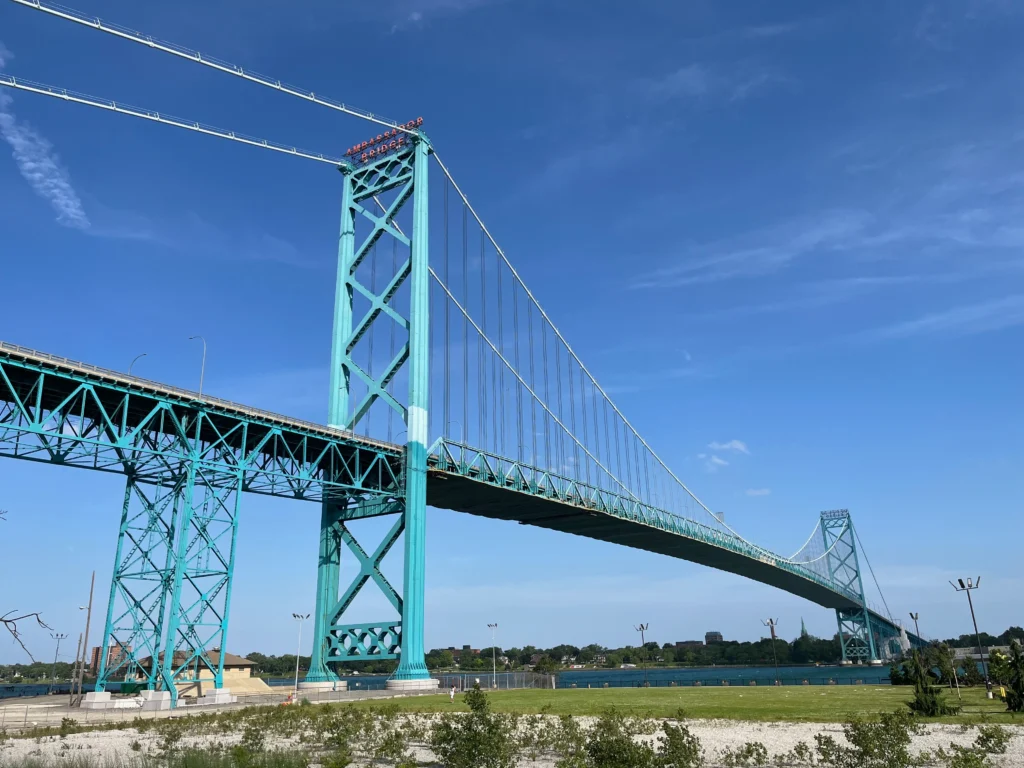


Why the U.S. is right to want more in Greenland, wrong to demand ownership, and how a deal could still work without breaking NATO
For business and financial leaders, the Greenland dispute isn’t about geography…it’s about risk. Tariffs deployed in security disputes, uncertainty over Arctic governance, and visible strain inside NATO all carry real implications for capital allocation, supply chains, insurance costs, and long‑term investment. The strategic problem is real. The economic stakes are real. Whether the outcome strengthens or destabilizes markets depends entirely on how it is resolved.
Yet beneath the controversy lies a legitimate strategic question: what does the United States actually need in the Arctic, and can it secure those interests without damaging the alliances that underpin global security and trade?
Answering that requires separating genuine strategic imperatives from political symbolism…and understanding why ownership offers little that access does not.
Why Greenland Matters…Militarily
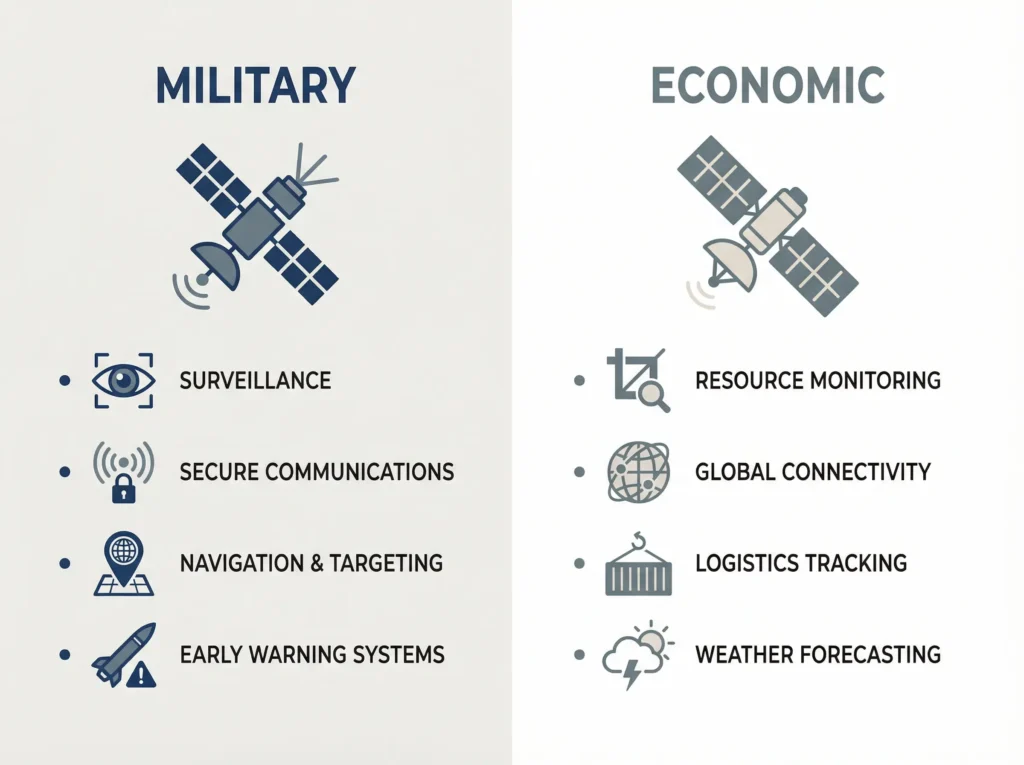
Greenland occupies a unique position in global defense geography. It sits astride the shortest flight paths for Russian…and potentially Chinese-missiles aimed at North America. The Pituffik Space Base (formerly Thule Air Base) hosts critical early‑warning radar and space‑tracking systems essential to missile defense and satellite monitoring.
Any expanded U.S. missile defense architecture in the Arctic depends heavily on this positioning. Analysts broadly agree that no alternative location offers equivalent coverage.
Greenland also anchors the Greenland‑Iceland‑United Kingdom (GIUK) Gap, the primary chokepoint through which Russian submarines must pass to reach the Atlantic. Monitoring this corridor has been central to NATO defense since World War II and remains essential as Russia modernizes its nuclear undersea fleet.
For defense, aerospace, and space‑technology firms, this matters directly. Arctic basing decisions shape long‑term procurement, infrastructure investment, and insurance risk. Stability and permanence…rather than sovereignty transfers are what enable capital to flow into these systems.
Why Greenland Matters…Economically
Greenland’s importance is no longer purely military. Climate change is extending seasonal access to Arctic shipping routes, while the island’s rare‑earth, uranium, copper, and zinc deposits are becoming economically viable at scale.
For financial and business leaders, this shifts Greenland from a geopolitical abstraction to a capital‑allocation question. Resource extraction and Arctic logistics depend on predictable legal frameworks, security guarantees, and access to state‑backed financing…factors that materially affect insurance premiums, project timelines, and returns.
The U.S. Export‑Import Bank’s support for rare‑earth development projects reflects a broader reality: critical minerals are now shaped as much by geopolitics as by markets. Governments increasingly steer capital toward “trusted” supply chains, making alignment and stability more valuable than maximal control.
In this context, uncertainty over sovereignty or security governance raises costs. Markets reward predictability, not brinkmanship.
What the U.S. Already Has
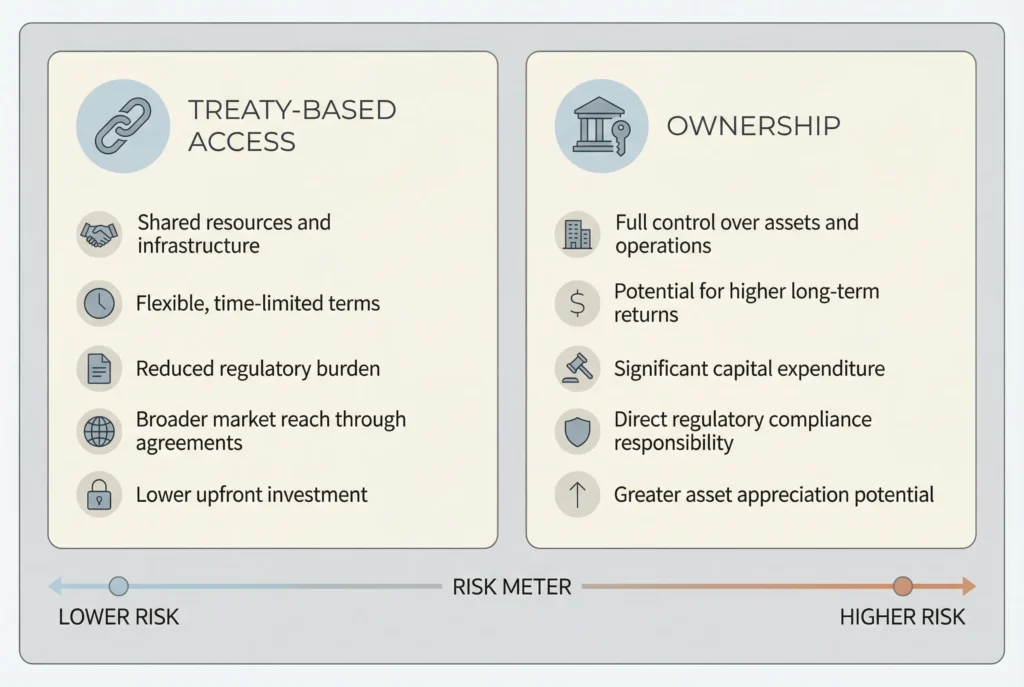
Despite the rhetoric, the United States already enjoys extraordinary access in Greenland. Under the 1951 U.S.–Denmark Defense Treaty, Washington can operate military bases, expand facilities, and establish new defense areas as required for security needs.
Both Denmark and Greenland have repeatedly stated they welcome an expanded U.S. presence. Recent Danish investments in Arctic surveillance, naval assets, and infrastructure reinforce this commitment, all within NATO’s collective defense framework.
From an operational standpoint, ownership adds little. Treaty‑based access can provide permanence through multi‑decade agreements, renewal clauses, and sunk infrastructure investments…without triggering alliance collapse or market instability.
For investors and corporate planners, this distinction is critical. Long‑term access backed by allied consent lowers political risk far more effectively than contested sovereignty.
Why Denmark and Greenland Are Saying No
For Denmark, Greenland is not merely territory…it is central to national identity and constitutional responsibility. Danish leaders have been explicit that a U.S. military move against Greenland would represent a fundamental breach of NATO itself.
For Greenland’s 56,000 residents—predominantly Indigenous Inuit…the stakes are even higher. After centuries of colonial governance, Greenland has spent decades building self‑rule and democratic institutions. Across its political spectrum, parties share a common goal: greater autonomy and eventual independence, not transfer from one sovereign to another.
Ignoring this reality would not only undermine democratic legitimacy; it would also inject long‑term political risk into any investment or security framework. Markets price legitimacy. Projects perceived as imposed rather than negotiated face higher costs and longer timelines.
What a Deal Could Actually Look Like
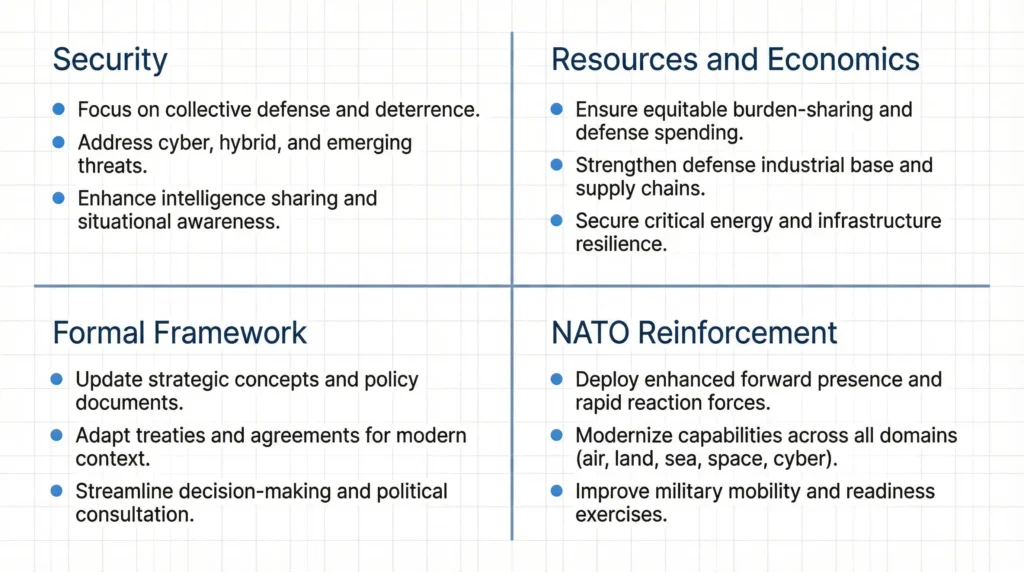
Despite the current impasse, a negotiated settlement remains possible…one that secures U.S. interests while preserving NATO and respecting Greenlandic self‑determination.
Security
- Permanent expansion of Pituffik Space Base
- One or two additional Arctic monitoring installations
- Joint U.S.–Danish–NATO Arctic command elements
- Pre‑positioned equipment and rapid‑deployment capabilities
Resources and Economics
- Priority access for U.S. firms in critical‑mineral projects
- Export‑Import Bank and allied financing support
- Revenue‑sharing agreements benefiting Greenland directly
- Environmental safeguards to reduce long‑term risk
Formal Framework
- Modernized defense treaty explicitly covering missile defense, space surveillance, and Arctic naval operations
- Multi‑decade commitments (50–99 years) with renewal clauses
- Legal permanence without annexation
NATO Reinforcement
- A formal NATO Arctic headquarters in Greenland
- Multinational presence to demonstrate collective security
- Regular Arctic exercises integrated with Nordic defense cooperation
Such an arrangement would deliver permanence in practice—while preserving alliance cohesion and market confidence.
The Real Constraint: Politics, Not Strategy
The remaining obstacle is not strategic necessity but political framing. President Trump appears to equate compromise with weakness and ownership with strength, even when access delivers identical outcomes.
Looked at differently, this episode resembles a familiar negotiating pattern. By opening with an extreme position, applying public pressure, and forcing movement from allies, the administration has already extracted concessions that would have been politically difficult under normal circumstances. If the outcome is a permanent, treaty‑backed U.S. security presence, priority access to resources, and long‑term strategic exclusivity in the Arctic, the president could plausibly claim a significant victory…without annexation. In that sense, the real question is not whether a deal is possible, but whether substance can be accepted without insisting on symbolism.
What Failure Would Cost
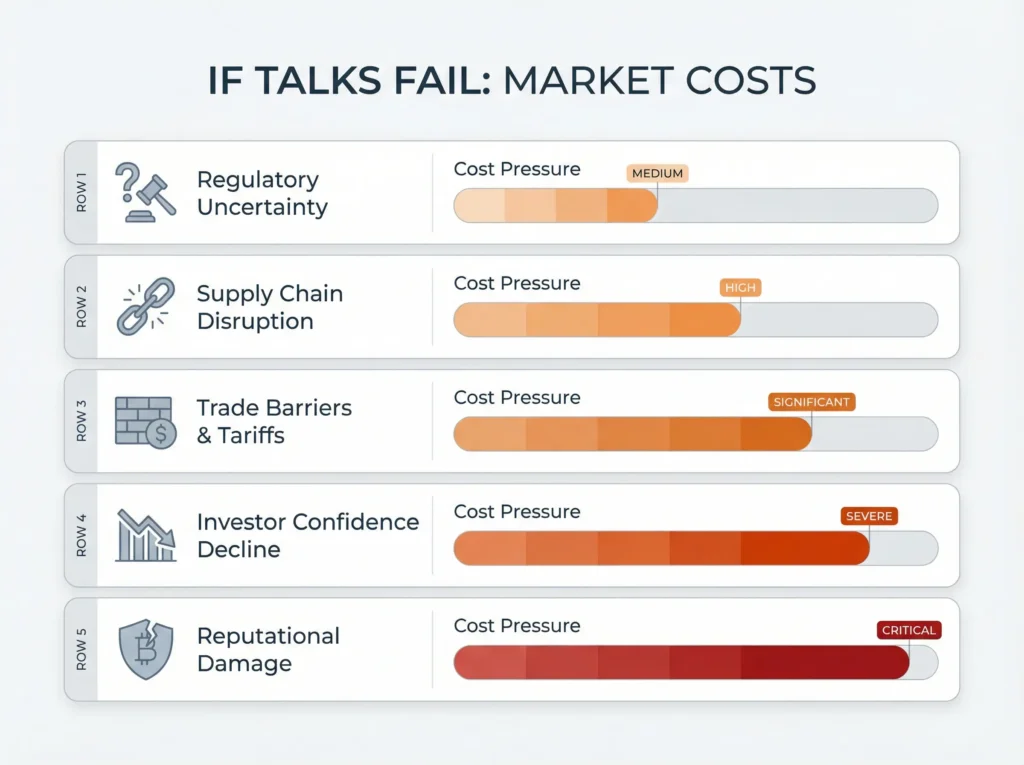
If negotiations succeed, the result could be a durable Arctic security and economic framework…strengthening deterrence, enabling investment, and preserving NATO unity.
If they fail, the consequences extend far beyond Greenland:
- Tariffs used as coercive tools among allies
- Higher political‑risk premiums across transatlantic trade
- Delayed infrastructure and resource investment in the Arctic
- Reputational damage to U.S. leadership at a time of global competition
Markets are not currently pricing in a serious NATO fracture. But they would adjust quickly.
Bottom Line for Leaders
The Greenland dispute is a reminder that geopolitics is now a core business variable. Security arrangements shape capital flows, supply chains, and trade stability.
The strategic problem is real. The solution is available. What remains uncertain is whether symbolism will be allowed to override substance.
help companies small and large on mitigating tariff exposure and broader supply chain strategies…taking actionable steps to give you greater confidence on a logical path forward.
Tariff Refund‑Rights Preservation Checklist
I built a one‑page checklist covering:
• Liquidation tracking • PSC timing • protest rules • documentation for scrutiny • transfer pricing alignment • weekly broker review • economic‑burden proof requirements
Download here: https://supplychainalytics.ai/refund-rights-preservation-checklist/