
Latest developments from tariff policy chaos and immediate supply chain implications
Breaking News: President Trump announced steel and aluminum tariffs will double from 25% to 50% effective Wednesday, while federal courts continue battling over the legality of broader tariff authority. Meanwhile, new data shows the deepest supply chain disruptions since 2020, with critical inventory deadlines approaching.
This Week’s Major Developments
Steel Tariff Escalation:
- Steel and aluminum tariffs double from 25% to 50% effective Wednesday
- Canada tensions spike – top U.S. steel supplier faces doubled tariffs
- European retaliation threatened as EU prepares countermeasures
- Construction/auto sectors face immediate cost pressure
Legal Chaos Continues:
- Federal appeals court temporarily reinstated blocked tariffs Thursday
- Legal briefs due June 5 (plaintiffs) and June 9 (government)
- Supreme Court threat if appeals process doesn’t favor administration
- Months of uncertainty ahead for contract negotiations
Supply Chain Data Deterioration:
- 43% week-over-week drop in containers through April 28
- Export collapse reaching “nearly all U.S. exports”
- Inventory levels critical – retailers down to 6-8 weeks supply
- “Abandoned freight” moved to auction houses as importers can’t afford tariffs
Economic Reality Check: Q1 GDP Contraction Confirms Crisis
First Economic Contraction Since 2022: Real GDP decreased at an annual rate of 0.3% in Q1 2025 (revised to 0.2% in the second estimate), marking the first quarterly contraction since Q1 2022. This followed 2.4% growth in Q4 2024.
Import Surge Drives Contraction: The economic contraction was primarily driven by imports soaring 41.3%, with goods imports spiking 50.9% as companies and consumers rushed to purchase foreign goods ahead of Trump’s tariffs. Imports subtracted more than 5 percentage points from the headline GDP reading.
Front-Loading Behavior Creates Future Risk: Economist Tara Sinclair warned: “The weakness this quarter is also a preview of weakness in future quarters. We are seeing a dramatic change in people’s behavior, similar to what we saw during the shock of the pandemic. They’re front-loading purchases they might’ve made later in the year, and that’s very concerning for future quarters.”
Lutnick’s Hardline Stance: No Backing Down
10% Baseline Tariffs Are Permanent: Commerce Secretary Howard Lutnick declared on CNN’s “State of the Union”: “We will not go below 10%, that is just not a place we’re going to go.” He insisted that “businesses, their job is to try to sell to the American consumer, and domestically produced products are not going to have that tariff, so the foreigners are going to finally have to compete.”
Tariffs “Not Going Away” Despite Legal Challenges: Lutnick dismissed EU claims of “extra leverage” from legal uncertainty, saying “It cost us maybe a week” and “everybody came right back to the table.” He emphasized that President Trump “has so many other authorities that even in the weird and unusual case” where courts rule against current tariff authority.
Unwavering Commitment Despite Market Turmoil: Despite global markets erasing $7.46 trillion in market value, Lutnick told CBS’s “Face the Nation”: “The tariffs are coming. Of course they are. There is no postponing. They are definitely going to stay in place for days and weeks.”
China Talks Stalled: Trump-Xi Call This Week
Stalled Negotiations: Treasury Secretary Scott Bessent told Fox News that U.S.-China trade talks “are a bit stalled,” requiring the two countries’ leaders to speak directly. “I believe that we will be having more talks with them in the next few weeks,” he said, adding that there may be a call between Trump and Xi “at some point.” It looks like it is happening but of course it involves risk of further deterioration.
Trump Accuses China of Violations: On Friday, Trump accused China of “totally violating” their recent Geneva agreement, particularly regarding slow movement on promises to issue export licenses for rare-earth minerals. He threatened further escalation while maintaining that China talks were ongoing.
Geneva Deal Unraveling: The May breakthrough that temporarily reduced China tariffs to around 30% from 145% appears to be unraveling, with both sides accusing each other of non-compliance and the 90-day truce period set to expire in mid-August.
Supply Chain Impact Analysis
Construction Supply Chains Under Siege: The steel tariff doubling creates immediate pressure for construction projects and infrastructure development. Canada, the No. 1 foreign supplier, shipped 6.6 million tons of steel to American buyers last year, meaning major supply chain cost increases are inevitable.
Auto Manufacturing Hit: Auto manufacturers already dealing with complex global supply chains now face doubled costs on steel inputs. The timing coincides with back-to-school and holiday inventory decisions, creating a perfect storm of cost pressure.
Downstream Cost Cascade Across Sectors: The steel and aluminum tariff doubling creates a ripple effect across numerous industries dependent on these materials:
- Construction & Infrastructure: Building materials, structural steel, roofing, and siding costs escalate immediately
- Appliance Manufacturing: Refrigerators, washers, dryers, and HVAC systems face higher input costs
- Transportation: Ships, trucks, rail cars, and aircraft manufacturing impacted by aluminum price increases
- Energy Sector: Wind turbines, solar panel frames, and oil drilling equipment costs rise
- Food & Beverage: Aluminum cans, food processing equipment, and packaging materials affected
- Consumer Electronics: Laptop cases, smartphone frames, and electronic housings see cost pressure
These downstream effects mean the 50% tariff increase will be felt far beyond primary steel and aluminum users, cascading through supply chains to impact virtually every manufacturing sector. Will Tump back down….stand by. This could have the largest impact so far on costs and other disruptions.
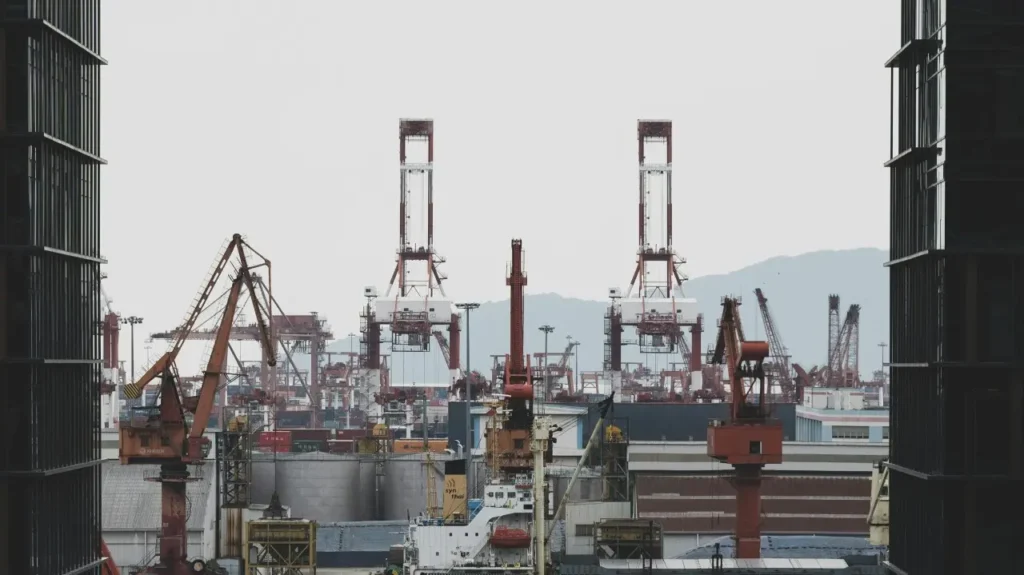
The “Abandoned Freight” Problem: Retailers tell CNBC they were forced to abandon some freight at the ports because it was too expensive to pay the expected tariffs on China. This freight is being moved to secondary markets and auction houses, representing millions in lost inventory.
Critical Timing Pressure: “May is traditionally the month where a lot of purchase orders go in for the year-end and Christmas holidays. It typically takes about three months to send an order to a factory, have those goods made and get them ready to ship” according to Port of LA executives.
The Recession Reality Check
CEO Sentiment Darkening: BlackRock CEO Larry Fink said that based on conversations with CEOs across the economy, the U.S. is either very close to or already in a recession now. Supply chain surveys show 63% expect recession as the base case.
Order Cancellation Wave: 89% of respondents report the most widespread reaction to Trump tariffs is the cancellation of orders, creating a cascade effect through global manufacturing networks.
Small Business Impact: “Small consumer companies that started with an innovative idea do not have the capital to invest in building factories,” with many forced overseas due to lack of U.S. production facilities.
The Globe-Hopping Strategy Accelerates
Reshoring Reality: 47% of companies say reshoring would more than double costs, while 61% say it’s more cost-effective to relocate to lower-tariffed countries rather than move back to the US.
Complex Supply Chain Reconfiguration: Companies are implementing “China Plus One” strategies that are now being disrupted by tariffs on alternative countries like Vietnam and India, forcing a global search for low-tariff manufacturing locations.
What Supply Chain Leaders Need to Know
Immediate Actions Required:
- Steel/Construction Projects – Lock in contracts before Wednesday’s 50% rate takes effect
- Holiday Inventory – Critical ordering decisions must be made within weeks
- Contract Renegotiation – Legal uncertainty requires tariff adjustment clauses
Medium-Term Strategy: The combination of legal uncertainty and escalating tariffs means supply chain leaders need three-scenario planning:
- Legal victory – tariffs reduced or eliminated
- Status quo – current uncertainty continues through court appeals
- Escalation – additional tariff increases and expanded scope
The New Reality: Even with the 90-day China tariff reduction to 30%, the stacking of other costs and other disruptions make many import relationships unsustainable without more relief. The big question is when and what does relief look like.
What If: Administration’s Next Moves if Courts Don’t Cooperate
If Federal Courts Strike Down IEEPA Authority: Trade adviser Peter Navarro’s warning that “we will find another way” signals the administration has multiple backup strategies prepared:
Congressional Route:
- Traditional tariff legislation through Congress with Republican majorities
- Fast-track authority for negotiated trade agreements with built-in protection
- Longer timeline but legally bulletproof approach
Alternative Legal Authorities:
- Section 232 expansion – broaden “national security” rationale to more products
- Section 301 proliferation – multiple “unfair trade practice” investigations
- Antidumping/countervailing duty cases – product-by-product protection approach
Regulatory Workarounds:
- Import licensing requirements creating bureaucratic delays and de facto barriers
- Enhanced customs enforcement – slow clearance times through “enhanced screening”
- Standards and certification requirements – technical barriers requiring U.S. compliance testing
- Country-of-origin verification – complex documentation requirements
Negotiated Alternatives:
- Voluntary export restraints – pressure trading partners to self-limit exports
- Quota systems instead of tariffs – numerical limits on imports
- Bilateral sectoral agreements – industry-specific protection deals
The Administration’s Likely Strategy: Given the steel tariff escalation despite legal challenges, expect a multi-front approach: maintain court appeals while simultaneously implementing alternative measures. The goal appears to be achieving protection through various means rather than relying solely on IEEPA authority.
Bottom Line
We’re witnessing the most significant supply chain disruption since 2020, but this time it’s policy-driven rather than pandemic-driven. The Q1 GDP contraction of 0.3% – the first since 2022 – confirms that tariff-driven import surges and policy uncertainty are creating real economic problems.
The steel tariff doubling signals continued escalation despite legal challenges, while abandoned freight and order cancellations show the human cost of trade policy uncertainty. With Lutnick’s unwavering stance on permanent 10% baseline tariffs, stalled China negotiations requiring Trump-Xi intervention, and evidence of front-loading behavior that threatens future quarters, supply chain leaders face an unprecedented policy-driven crisis The Atlanta Fed’s GDPNow model currently forecasts 3.8% growth for Q2, suggesting either a dramatic turnaround or continued volatility ahead.
How are steel tariff increases affecting your construction or manufacturing timelines? What backup supply chain strategies are you implementing?