

Why Hesitation Could Be Fatal
The US economy just delivered a wake-up call that changes everything for supply chain strategy.
The Numbers That Matter
GDP: Revised to 3.8% in Q2, tracking 4% for Q3 – not the recession everyone predicted
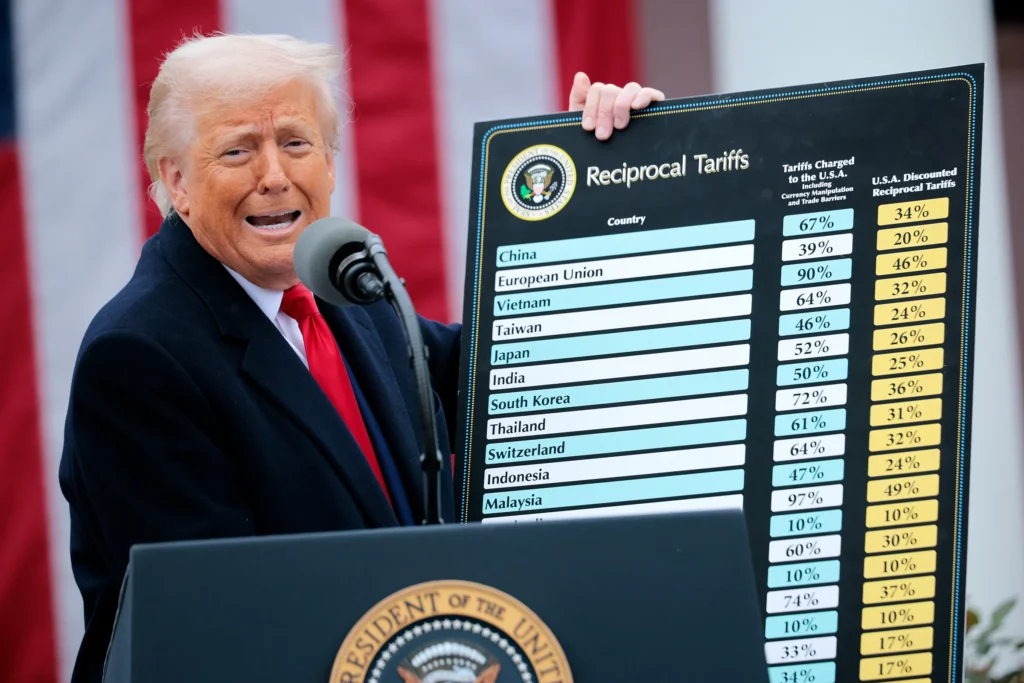
Consumer Spending: Up 2.5% with wages rising 3.1% – the economy is absorbing 25% average tariffs
The Big One: $17 trillion in committed investments creating the largest capital deployment cycle in modern history
Breaking Legal News (Sept 25)
Federal Circuit upheld Section 301 tariffs on Chinese imports as legal, while IEEPA tariffs face Supreme Court review in November. This means:
- Section 301 & 232 tariffs = legally secure foundation
- IEEPA tariffs = at risk (could drop from 69% to 16% of import coverage)
The Explosion Point
This isn’t about managing disruption. It’s about permanent market share redistribution.
First movers are locking in:
- Skilled engineering talent and project managers
- 2025 pricing on steel, electrical components, equipment
- Prime industrial sites with infrastructure access
- Strategic partnerships with best domestic suppliers
Late movers will face:
- Resource starvation at premium pricing
- Inferior locations with logistics constraints
- Depleted talent pools requiring massive premiums
- Supplier relegation as capacity commitments fill
The $17 Trillion Reality
Simultaneous buildouts across AI, manufacturing, energy, and semiconductors create unprecedented competition for:
- Construction materials and specialized equipment
- Skilled trades and engineering resources
- Transportation networks and port capacity
- Project management and execution capability
Construction costs: Already rising 15-20% annually in high-demand markets
Equipment lead times: Extending from months to years
The cliff event: Resource availability will hit a wall in 2026-2027
What Supply Chain Leaders Must Do NOW
- Secure resources immediately – Long-term contracts for critical materials before constraints tighten
- Map cross-sector dependencies – Your AI project competes with everyone else’s for the same inputs
- Lock in strategic supplier partnerships – Best partners choosing customers while they can be selective
- Plan around legal certainty – Prioritize investments in Section 232/301 protected sectors
- Move before November – Supreme Court IEEPA decision creates policy inflection point
The Uncomfortable Truth
Companies waiting for “more certainty” will find themselves permanently disadvantaged. The certainty they seek will arrive precisely when opportunities disappear.
This may be the last chance to build market-leading domestic capacity before resource constraints make it prohibitively expensive – or impossible.
The window is closing. The question is: Are you already breaking ground, or still waiting for signals that have already been sent?
What are you seeing in your industry? Are resource constraints already tightening? Call me to discuss your supply chain strategy and how to get on board this fast moving train…