
By the time markets closed Friday, the story had already flipped twice. By Saturday morning it had flipped again. Let me walk you through what actually happened…and what it means for manufacturers, distributors, and anyone running a supply chain that touches imported goods.
What the Court did…
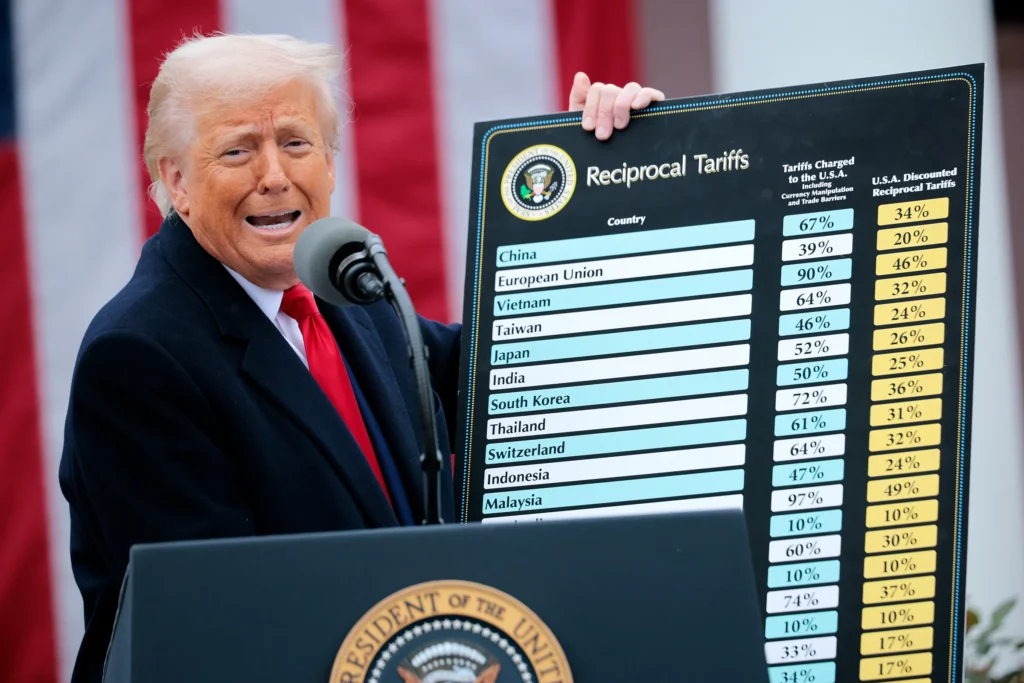
Friday morning the Supreme Court ruled 6-3 that President Trump exceeded his authority using the International Emergency Economic Powers Act to impose sweeping tariffs on virtually every trading partner. The reciprocal tariffs on Europe, Japan, South Korea, ASEAN nations, Canada, and Mexico…struck down. The additional IEEPA surcharges on China…gone. The 25% fentanyl-related tariffs on Canada and Mexico…removed.
For companies that have been absorbing those layers since April 2025, that’s real and immediate cost relief. Landed costs drop. Margins recover…at least on paper.
And there’s a potential cash recovery on top of it. Over $175 billion in IEEPA duties have been collected since February 2025. Importers who preserved their protest rights may be eligible to recover those duties with interest. For some businesses, that’s a lifeline.
What happened four hours later — and again Saturday morning!
Friday afternoon Trump announced he would sign an order imposing a 10% global tariff under Section 122, “over and above our normal tariffs already being charged.”
He also said he is initiating several new Section 301 investigations…the necessary precursor to imposing tariffs under that separate trade law.
And then Treasury Secretary Bessent delivered the line that should be the headline for every supply chain leader in America right now: Treasury’s estimates show that the use of Section 122 authority, combined with potentially enhanced Section 232 and Section 301 tariffs, will result in virtually unchanged tariff revenue in 2026.
Read that carefully. The administration’s own Treasury department is telling you Friday’s ruling doesn’t change their revenue math.
Then Saturday morning Trump raised the Section 122 tariff from 10% to 15% — the statutory maximum — via Truth Social, saying he was raising it to “the fully allowed, and legally tested, 15% level.” Within 24 hours of the Supreme Court ruling the administration had moved to the absolute ceiling of its remaining legal authority. The instrument changed. The economic footprint is designed to stay the same.
What Section 122 actually is…and why it’s already being challenged.
Section 122 of the Trade Act of 1974 allows the president to impose a global import surcharge of up to 15% for up to 150 days to address what the statute calls “large and serious” balance-of-payments deficits. Any extension beyond 150 days requires congressional approval. The new 15% tariff takes effect February 24th…running the clock to approximately mid-July.
Here’s where it gets interesting. The legal challenge to Section 122 is already forming, and it has real teeth.
The statute requires a genuine balance-of-payments emergency to justify its use. The data tells a complicated story. The U.S. recorded a $901.5 billion trade deficit in 2025 — slightly less than the $903.5 billion gap in 2024, and still among the largest since 1960. That gives the administration something to point to.
But the current account…the proper legal measure under Section 122 is actually narrowing. The U.S. current-account deficit narrowed to $226.4 billion, just 2.9% of GDP in Q3 2025, down from 3.3% in Q2. And crucially, it narrowed because of tariffs already in place…which undermines the argument that an emergency requiring new Section 122 action still exists.
Trade experts are already flagging a deeper problem. Section 122 was designed for a fixed exchange rate era…enacted after Nixon’s currency crisis…and was effectively rendered obsolete when the U.S. adopted a floating exchange rate system that is self-adjusting. One trade economist put it plainly this weekend: “Section 122 only authorizes tariffs in the presence of a fundamental international payments problem. Because the United States does not face such a problem, Section 122 cannot legally be used.” Whether courts agree remains to be seen…but the legal exposure is real and the challenges are already being prepared.
There’s a further irony worth noting. Trump’s own tariff policy may have reduced the deficit enough to weaken the legal justification for the next round. The same Supreme Court that just said IEEPA requires explicit congressional delegation of tariff power will eventually be asked whether Section 122 meets that standard when applied as a broad replacement instrument rather than a genuine emergency tool.
Courts will likely let the 15% stand through its 150-day window…the statutory language is at least plausibly applicable in the short term. But mid-July becomes the next major inflection point. When the clock expires the administration either needs congressional extension, declares a new emergency and restarts the clock, or loses the baseline entirely. Each of those scenarios carries different cost implications for your supply chain. And the White House has already signaled that as Section 301 and 232 investigations mature, rates on individual countries may snap back to their higher bilateral levels…meaning the 15% may be a floor, not a ceiling, for some trading relationships. Just when you thought 10% was the new zero!
The refund question…why CBP is the hidden bottleneck, and why thousands of companies already knew it.
Here’s where businesses hoping for meaningful near-term cash recovery need to understand the full obstacle course…because it isn’t just Trump’s press conference posture that stands between you and your money. It’s the administrative machinery itself. And the most sophisticated importers in America figured this out months ago.
At Friday’s press conference, Trump said of paying the refunds, “I guess it has to get litigated for the next two years. We’ll end up being in court for the next five years.” The administration previously made binding legal commitments guaranteeing refunds with interest to specific groups of importers…commitments the CIT has confirmed cannot be walked back. But public posture and legal obligation are different things, and every delay tactic available will likely be deployed.
Now layer in the CBP problem..and this is the piece most businesses aren’t thinking about.
As of December 10, 2025, more than 301,000 importers had made more than 34 million entries subject to IEEPA tariffs. CBP has never processed a refund event remotely close to this scale. The agency is now the operational chokepoint between a court order and actual cash in your account…and the legal architecture around that chokepoint is more complicated than almost anyone outside of trade law circles understands.
The traditional protest mechanism…the standard way importers challenge CBP decisions…is in genuinely unsettled legal territory for IEEPA tariffs specifically. The CIT has indicated that because CBP collected these tariffs pursuant to executive orders with no agency discretion, the collection may be considered a purely ministerial act…meaning CBP had nothing to “decide” and therefore nothing to protest. If that reasoning holds, the standard 180-day protest route may be unavailable or ineffective for many entries.
However…and this matters… trade attorneys are not uniform on this point. Multiple major firms are advising clients to file protests anyway as a backstop, arguing there are legitimate grounds that protests remain valid and that having the filing on record creates a paper trail regardless of how the legal question resolves. The honest answer is that this specific question is unsettled, and the safest position is to pursue both tracks simultaneously: file protective CIT actions under Section 1581(i) where possible…which carry an explicit government commitment not to oppose reliquidation…while also filing protests on liquidated entries within the 180-day window as insurance. Relying on protests alone, given current court signals, carries meaningful risk of losing refund rights entirely.
Here’s what makes this particularly striking: thousands of major companies read this situation clearly and acted months before the Supreme Court even ruled.
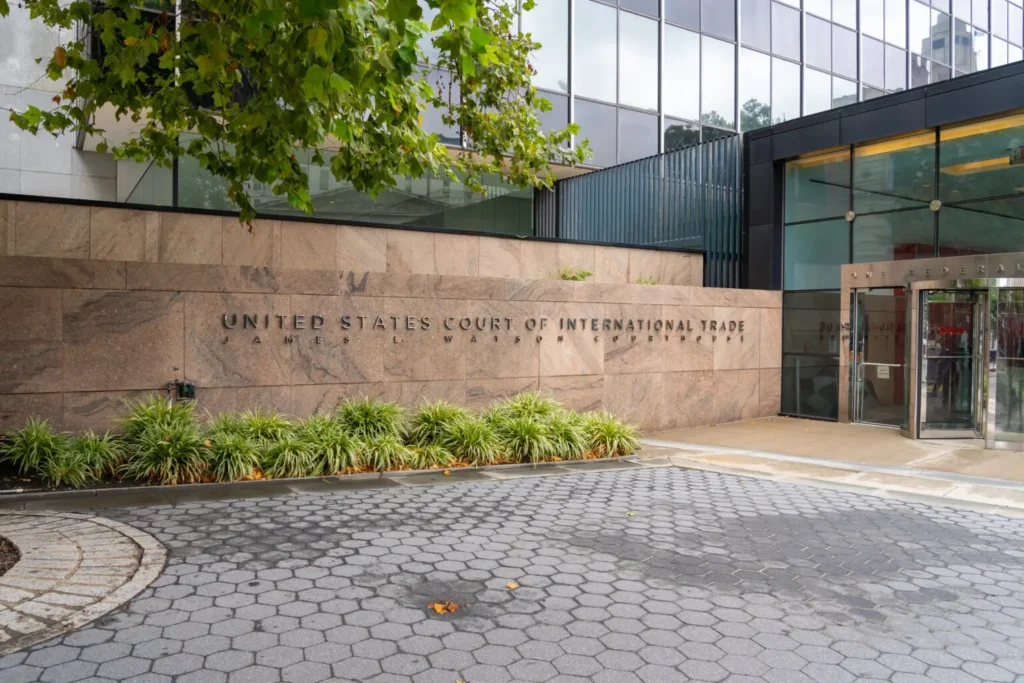
More than 2000 businesses filed protective lawsuits in the CIT to date, anticipating a ruling against the administration. They sought to preserve their right to claim refunds before their entries were liquidated and the filing window closed permanently. Filings increased sharply after Costco made its lawsuit public.
The reason they moved so early wasn’t speculation about the outcome…it was the liquidation clock. Entries subject to the first round of IEEPA trafficking tariffs imposed on February 4, 2025 were already reaching liquidation in late 2025. As December 2025 liquidation dates approached, importers sought extensions from CBP to preserve rights but CBP denied multiple requests.
That denial is important context. CBP wasn’t passively administering a neutral process. It was refusing to pause the liquidation clock while companies waited for the Supreme Court to rule…forcing thousands of businesses into an impossible position. File at the CIT now or potentially lose your refund rights permanently, regardless of how the Court ultimately ruled.
The CIT confirmed the stakes explicitly: the only method to preserve refund rights until the Supreme Court held the tariffs unlawful, even for liquidated entries, was to file a timely case at the CIT.
The companies that understood this and acted are now at the front of whatever refund process emerges. The list includes entities affiliated with Costco, Toyota, Goodyear, Columbia Sportswear, Barnes & Noble, Logitech, Peloton, Dole, J. Crew, GoPro, Bath & Body Works, Steve Madden, Crocs, and Yeti — alongside hundreds of small businesses. These aren’t companies that file litigation casually or speculatively. When household names across retail, manufacturing, food, and consumer goods all independently concluded that preemptive CIT filings were necessary, it tells you exactly how high the stakes were…and how little confidence existed that the administrative process alone would protect their interests.
The companies that waited are at the back of the line…or potentially out entirely, depending on how the CIT frames relief for non-plaintiffs as the refund process develops.
There are additional operational layers that will slow everything further regardless of legal outcomes. Customs brokers will be under significant strain with limited capacity to manage a surge of post-summary corrections and protests across thousands of importers. Even where tariff refunds may be available, many companies will face internal capacity constraints as customs and trade compliance teams are already stretched managing day-to-day filings, enforcement activity, and ongoing tariff changes.
And one more detail that almost nobody is talking about publicly yet: CBP moved to an all-electronic refund system via ACH beginning February 6, 2026. Importers who haven’t enrolled in CBP’s ACE portal and submitted banking information won’t receive payments until they do. For large sophisticated importers this is administrative noise. For the thousands of smaller importers who make up the bulk of affected businesses, it’s one more step in a process most of them have never navigated at this scale.
And then there’s the tax question….
If your company deducted IEEPA tariff payments as cost of goods sold in 2025…which most importers did…the IRS may treat any refund received as taxable income in the year it is received under the tax benefit rule. The refund isn’t simply a return of money. It may arrive with a federal income tax liability attached. State and local tax implications add another layer…particularly for companies that paid sales or use taxes on tariff-inclusive purchase prices. And for multinationals, the complexity compounds further: transfer pricing structures built around tariff costs may require recalibration, intercompany pricing agreements may need adjustment, and cross-border cash repatriation of refund proceeds carries its own planning requirements.
The bottom line is that a refund your finance team is modeling as a straightforward cash recovery may need to be modeled net of tax — potentially significantly net of tax depending on your structure, jurisdiction, and accounting treatment. This is not a customs question. It’s a tax question. And it needs to be in the room when your CFO and tax counsel are discussing refund strategy…not discovered after the check arrives.
The honest picture on refunds: even if the CIT moves quickly and CBP cooperates fully, processing refunds across 34 million entries involving 301,000 importers is a multi-year undertaking. If the administration slow-walks CBP implementation…which Friday’s press conference strongly suggests…it stretches further. And when refunds do arrive, they may not be the windfall your balance sheet is expecting once tax obligations are netted out. Companies that treat refunds as a near-term liquidity event are building their financial plans on a foundation that doesn’t exist yet.
What you should do right now: inventory every IEEPA entry by HTS code and liquidation status, confirm ACE portal enrollment and ACH banking information is current with CBP, verify your CIT case status or protest filings with trade counsel immediately, engage your tax counsel on the federal and state income tax treatment of anticipated refunds, and build refund timing and net recovery across at minimum three scenarios — optimistic, realistic, and contested. The difference between those scenarios could be measured in years and significant dollars, not months and round numbers.
What’s still in place regardless of any of this.
This is the part the headlines keep underplaying.
Section 232 tariffs on steel, aluminum, copper, lumber, furniture, and automobiles remain fully intact. The furniture industry faces a 25% tariff today expected to rise to 50% in 2027. A Section 232 investigation on pharmaceuticals is open with rates potentially reaching 250%.
Section 301 tariffs on China remain fully intact. And new Section 301 investigations launched Friday — which will mature into additional tariffs over the coming months across categories and countries the administration views as priorities.
The largest goods deficits in 2025 were with China at $202 billion, Mexico at $197 billion, and Vietnam at $178 billion. Those are the targets. If you’re sourcing heavily from any of those three, your exposure hasn’t materially changed this week — and may increase as Section 301 investigations advance.
What this environment actually looks like on the ground.
I’ve spent the last year working with manufacturers and distributors navigating what became the most volatile tariff environment in modern U.S. history. Here’s what I consistently observed.
The companies that struggled most weren’t always the ones with the worst tariff exposure. They were the ones that treated tariff risk as an episodic event…something that would eventually resolve…rather than a permanent structural condition requiring active management. They waited. They absorbed hits reactively. They made sourcing and inventory decisions based on optimistic assumptions about policy normalization that never came. Unfortunately some didn’t survive…
The companies that held their ground…and in some cases gained competitive position…did three things differently. They mapped their full exposure across every tier of their supply chain, not just direct suppliers. They modeled replacement scenarios before announcements forced them to. And they restructured supplier contracts and geographic concentration during the windows between disruptions rather than after the next round landed.
The refund story reinforces the same pattern. The companies now best positioned for recovery aren’t the ones who waited to see how the Supreme Court ruled. They’re the ones who mapped their legal exposure, understood the liquidation clock, engaged trade counsel early, and filed protective actions while others were still hoping the problem would resolve itself. Preparedness didn’t just protect their operations…it protected their balance sheets. And the ones who will maximize their net refund recovery are the ones who have their tax counsel in the room now…not later.
The planning calendar for the next 180 days.
Between now and mid-July you have the most defined planning window you’ve had in over a year. The 15% Section 122 baseline is known. Section 232 and 301 exposures are largely known. Bilateral deals are advancing with meaningful partners. Use this window aggressively…recalculate landed costs at the new 15% baseline, renegotiate supplier terms, stress test your sourcing concentration, get your refund documentation in order, and get your tax counsel aligned on refund treatment before the first dollar arrives.
Mid-July is the next major inflection. Section 122 either expires, gets extended by Congress, or gets restarted by a new presidential declaration. Model all three now. And watch for bilateral deal rates snapping back to higher levels as Section 301 and 232 authorities mature…the 15% may not hold for every trading relationship.
Behind that, watch the Section 301 investigation announcements closely. These are the slow-moving wave building behind the Section 122 action. The targets will tell you where the next significant tariff layers land…and you’ll have a planning window to respond if you’re tracking them.
The bottom line….
Friday the Supreme Court drew a constitutional line on presidential tariff authority. By Friday afternoon the administration had stepped directly up to that line. By Saturday morning it had moved to the absolute ceiling…15%, the statutory maximum, within 24 hours of the ruling.
The ruling mattered. Procedural constraints are real. The era of overnight unlimited tariff imposition on any country for any reason is meaningfully harder.
But Treasury confirmed Friday what supply chain professionals already understood: the economic footprint of this tariff regime is designed to stay in place. The instrument changed. The intent didn’t. And Saturday’s move to the 15% ceiling confirmed it in plain sight.
For supply chain leaders the strategic question remains what it’s been for the last year. Not whether tariffs persist. Whether your organization is built to manage them as a permanent operating condition…with active exposure mapping, scenario modeling, contract structures that absorb volatility, refund recovery processes that don’t assume the government cooperates, and tax planning that accounts for what a refund actually nets out to.
The Costcos and Toyotas of the world knew months ago that waiting was a losing strategy. They filed. They preserved their position. They didn’t assume the system would protect them.
Friday was a significant legal moment. Saturday was a clarifying one.
Mid-July is closer than it looks.
Dan Krouse is a senior advisor supply chain executive at Supplychainalytics, working with manufacturers and distributors on tariff risk, sourcing strategy, and end-to-end supply chain structure. If this weekend’s developments raised questions about your specific exposure, your refund position, your tax treatment, or how to use this planning window, reach out directly.