

When Wall Street moves $1 billion in 72 hours, that’s not policy-that’s reality.
Last week, while headlines obsessed over Trump’s 100% tariff announcement, the real game-changer happened quietly: China weaponized rare earths, and it backfired spectacularly. Treasury Secretary Scott Bessent summed it up: “This is economic warfare.”
The response? JP Morgan and Goldman Sachs poured $1 billion into rare earth mining overnight-an industry Wall Street ignored for decades. The signal? The Western supply chain playbook just changed.
The Five Moves That Shifted the Game
1. China’s “Bazooka” Moment (Thursday)
China imposed sweeping export controls on rare earth elements, requiring approval for anything containing even trace amounts.
The numbers:
- China: 70% of mining, 90% of processing, 90% of magnets.
- North America + Europe: Less than 2,000 tons annually.
- Gap: A staggering 100:1 advantage.
The move sent shockwaves through global industries. Ford and Suzuki, already disrupted by earlier restrictions, now faced permanent supply threats.
2. Trump’s Tariff Noise (Friday)
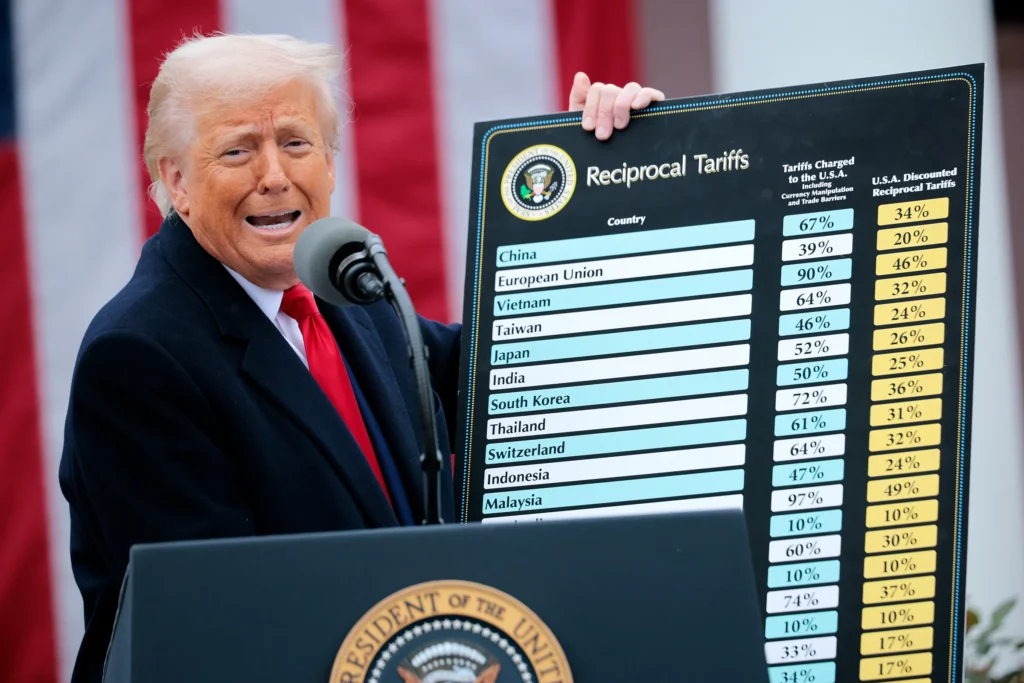
Trump announced 100% tariffs on Chinese imports, effective November 1. Markets panicked, shedding $2 trillion. But tariffs are negotiable and reversible. The real shift wasn’t in Washington; it was on Wall Street.
3. The $1 Billion Signal (72 Hours Later)
JP Morgan and Goldman Sachs bet $1 billion on MP Materials’ rare earth facility, an unprecedented move. Why? China’s actions proved two things:
- Weaponization is no longer a risk—it’s reality.
- Secure supply chains are profitable.
The new math:
- Pentagon guarantees: $110/kg price floors for 10 years.
- Western buyers: Paying 20-40% premiums for stability.
- Structural scarcity: Locked in through 2030.
Wall Street validated what governments feared: the era of secure, Western-controlled supply chains has begun.
4. Pentagon’s $550M Backstop
The U.S. government de-risked the sector:
- $400M equity in MP Materials (15% stake).
- $150M loan for expansion.
- $1B stockpiles of cobalt, antimony, and tantalum.
Wall Street followed the Pentagon’s lead, proving public-private coordination can dismantle China’s monopoly.
5. Europe’s Line in the Sand (Sunday)
In a bold move, the Netherlands invoked emergency laws to seize partial control of critical supply chain assets. While not explicitly targeting China, the message was clear: Western governments are ready to pull extraordinary levers to protect strategic industries.
Why China’s Bazooka Backfired
China’s export controls were meant to intimidate. Instead, they:
- Hit allies like Japan and Europe.
- Triggered coordinated Western investment.
- Made decoupling from China economically viable.
Bessent called it: “They made our case for supply chain security better than any briefing ever could.”
The Signal vs. The Noise
Trump’s tariffs grabbed headlines. Wall Street’s capital deployment sent the real message:
- Trump’s signal: “100% tariffs, maybe, unless we make a deal…”
- Wall Street’s signal: “$1 billion deployed. Deal closed. Facilities being built. Timeline: 2028.”
The results:
- Rare earth stocks surged 50%.
- MP Materials tripled in value since mid-year.
- The VanEck Rare Earth ETF is soaring.
Governments create volatility. Private capital creates reality.
The New Reality: The “Western Premium”
The cost of decoupling is permanent. Companies must factor 20-40% price increases into long-term planning.
Why the premium stays:
- Limited Western capacity vs. massive global demand.
- Pentagon price floors and guaranteed contracts.
- Companies value security over cost savings.
There’s no “return to normal.” The new baseline is here.
What Companies Must Do Before 2028
- Map Dependencies: Know your rare earth exposure across all tiers.
- Act Early: Secure supply contracts before capacity is allocated.
- Redesign Products: Reduce rare earth dependence and accept performance trade-offs.
- Prioritize Risk Management: Treat supply chain security as a C-suite priority.
The Bottom Line
China’s rare earth gambit was a miscalculation. In trying to demonstrate power, it:
- Validated Western security concerns.
- Mobilized $1.5 billion in Western capital.
- Mainstreamed decoupling as an economic reality.
The result? Western restructuring is no longer a hypothetical-it’s happening now.
Why this matters: Markets don’t move $1 billion on speculation. The smart money just bet that:
- China will escalate supply chain weaponization.
- Western decoupling is irreversible.
- Secure supply chains command premiums.
You have until 2028 to adapt. Early movers will thrive. Latecomers will scramble.
A Key Question
With this massive shift in supply chain economics, do you think the odds have changed on the Supreme Court ruling on Trump’s emergency tariff powers? If the court strengthens executive authority, what could that mean for future trade wars?