

Bottom Line: Trump promised “90 deals in 90 days” but delivered only 7 confirmed agreements out of dozens of threatened countries. His fundamental belief that “A letter means a deal” – treating unilateral communications as completed negotiations – explains much of the chaos. While he did secure last-minute breakthroughs with major partners like the EU and Japan, the gap between announcements and reality became a defining feature of his trade policy.
The Promise vs. Reality Gap
What Was Promised:
- “90 deals in 90 days” starting in April
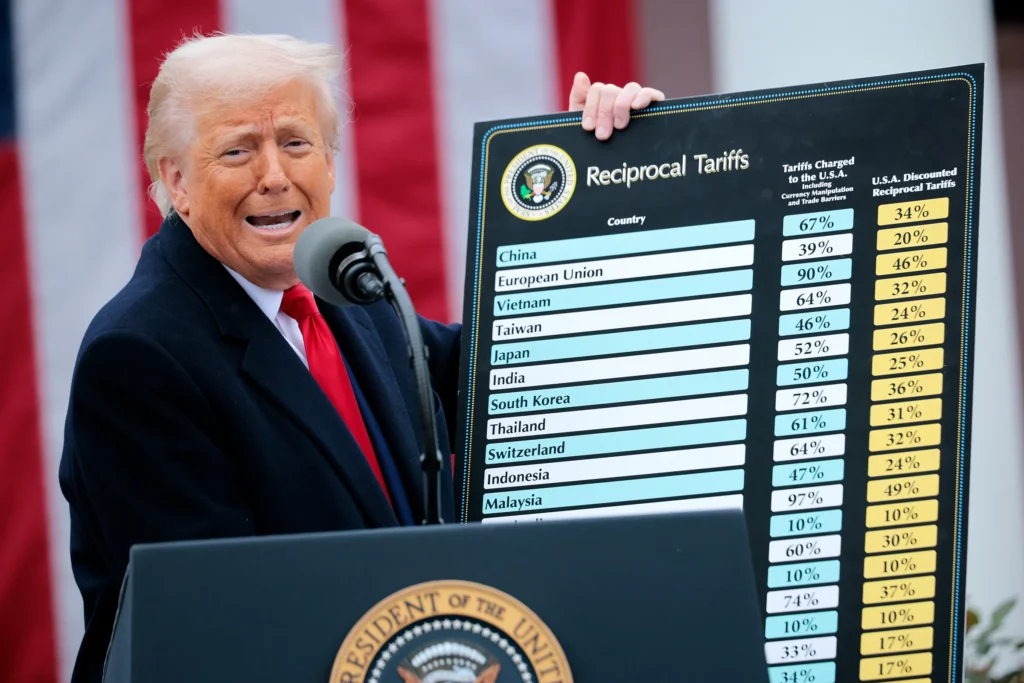
- Universal 10% baseline tariff with “reciprocal” rates up to 145%
- Complete rebalancing of global trade relationships
What Actually Happened:
- Only 7 confirmed bilateral agreements (UK, China, Japan, Philippines, Indonesia, Vietnam, EU)
- Multiple deadline extensions from April to August 1
- Average tariff rate hit 20.6% – highest since 1910
- $108 billion in tariff revenue but 49% burden fell on US consumers
Major Deals: What Both Sides Said
European Union (July 27 breakthrough) – Trump: Called it “the biggest deal ever made” with 15% tariffs instead of threatened 30%. EU: Von der Leyen said “15% is not to be underestimated but it is the best we could get” after “very difficult” talks.
Japan – Trump: Touted “massive deal” and claimed Japan would invest $550 billion. Japan: PM Ishiba celebrated but officials clarified the $550B was loans/equity for Japanese business investments, not direct cash.
China – Trump: Announced comprehensive trade deal pausing higher tariffs. China: Downplayed it as a framework representing just “the first meeting.”
Vietnam – Trump: Announced 20% tariffs with anti-China transshipment clause. Vietnam: Officials were “reportedly surprised” by Trump’s description and hadn’t formally accepted parts of the deal as of July 10.
Indonesia – Trump: Claimed $15B energy and $4.5B agricultural commitments. Indonesia: President Prabowo didn’t confirm specific details Trump announced.
The “Letter = Deal” Doctrine
Trump’s fundamental understanding was revealed in his own words: “A letter means a deal,” he said in a Cabinet meeting. His administration sent nearly identical form letters to countries announcing tariff rates, then treated these unilateral communications as completed bilateral negotiations.
The Reality: Most of Trump’s “deals” were actually just letters announcing tariff rates, not negotiated agreements. Countries that didn’t get deals face harsh treatment – Canada (35% tariffs), Mexico (30%), Brazil (50%).
Key Gaps and Contradictions
- Vietnam: Officials surprised by Trump’s announcement, deal still not formally accepted
- China: Beijing treated “comprehensive deal” as preliminary framework only
- Indonesia: No confirmation of Trump’s claimed purchase commitments
- Japan: $550B “investment” was actually business loans, not government transfer
- Canada: Trump cited fentanyl threat despite only 101 pounds seized at border in 18 months
Economic Impact
Revenue Projections: Mark Zandi, chief economist at Moody’s Analytics, said tariff revenue could exceed $300 billion by the end of 2025, which would amount to nearly 1% of U.S. gross domestic product. Over a decade, tariffs are projected to raise $5.2 trillion in new revenue over the next 10 years, even after accounting for reduced import demand due to higher prices.
Inflation Projections: Despite economist predictions of major price spikes, consumer prices rose just 2.4% annually in recent months. The Federal Reserve projects core PCE inflation hitting 2.7% for 2025 in its March projections, later revised to 3.1% in June due to tariff impacts. Fed Chair Powell expects tariff-driven price increases “over the course of the summer” as “it takes some time for tariffs to work their way through the chain of distribution.”
Interest Rate Outlook: The Fed projects two rate cuts in 2025, maintaining rates at 4.25%-4.50% currently but expecting gradual reductions as inflation pressures ease. Fed projections show rates falling to 3.9% by end of 2025. However, tariff uncertainty has made the Fed more cautious about timing cuts.
Market Response: Stock market initially panicked, then rallied as threats proved negotiable – the S&P 500 rose 9.52% for its largest one-day gain since 2008 when the tariff pause was announced.
The Bottom Line
Trump’s tariff strategy combined genuine diplomatic breakthroughs (EU, Japan deals) with systematic confusion about what constitutes a completed agreement. His “letter = deal” approach created numerous gaps between announcements and reality, but last-minute negotiations did yield significant results with major trading partners. The process was chaotic, but the EU deal alone – covering America’s largest trading partner – demonstrated that his brinkmanship tactics could produce substantial agreements, even if the diplomatic methodology was unconventional.
Need Help Assessing Your Tariff Exposure?
If you’re a business owner or investor concerned about how these tariff changes might impact your operations and supply chain… I can help you analyze your specific exposure and develop strategies to navigate this evolving trade landscape. Contact me to discuss your situation and explore options for managing tariff-related risks and opportunities.