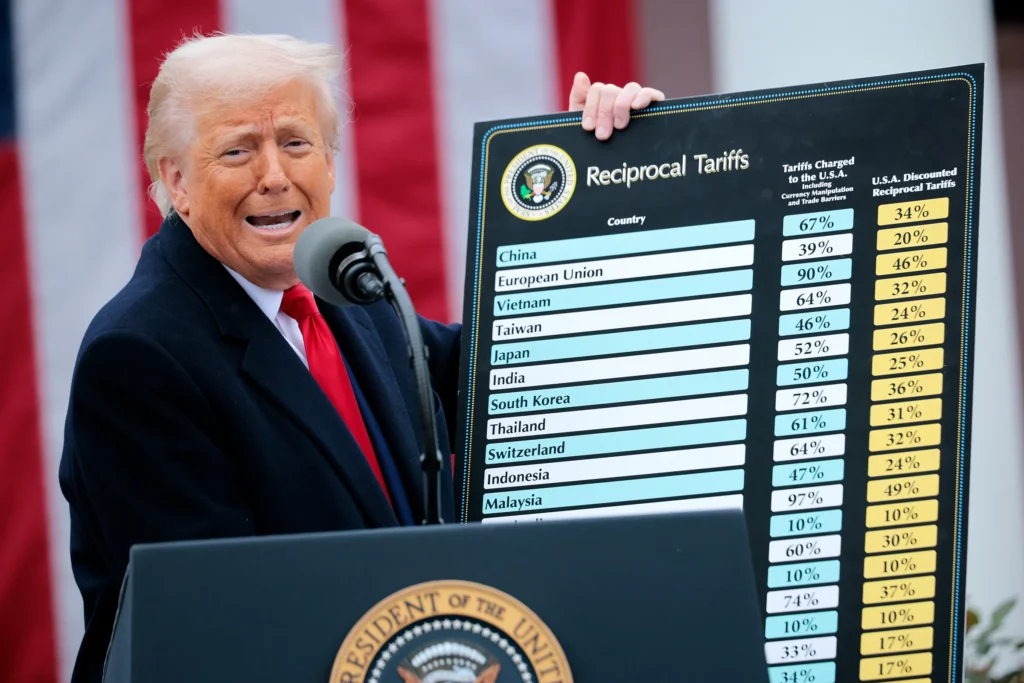


Everyone’s asking why countries are dragging their feet in trade negotiations with the US, despite the July 8 deadline looming. One theory? It’s the rare earth dependency chokehold.
The Numbers Don’t Lie:
- China controls 90% of global rare earth processing – not just mining, but the critical refining process
- US imports 77% of its rare earths from China (down from 80%, but still massive dependency)
- Japan reduced dependency from 91% to 58% after 2010 – but it took a decade and $10B+ investment
- Europe still imports 99% of heavy rare earths from China
The Strategic Reality:
China just demonstrated their leverage by restricting exports of 7 critical rare earth elements (samarium, gadolinium, terbium, dysprosium, lutetium, scandium, yttrium). These aren’t just “nice to have” – they’re essential for:
- F-35 fighter jets 🛩️
- Electric vehicle motors 🚗
- iPhone components 📱
- Wind turbine magnets 🌬️
- Defense systems 🛡️
Why Countries Are Hesitant:
The retaliation risk: Cut a favorable deal with the US, and China could punish you by restricting rare earths and other critical exports. We’ve seen this playbook before – China banned rare earth exports to Japan in 2010 over a fishing dispute. Now imagine that leverage applied to countries choosing sides in the US-China trade war. When your economy depends on Chinese supply chains, “good deals” with America become dangerous.
Companies are already reporting 40-60 days of stock left. European auto plants have shut down. This isn’t theoretical – it’s happening NOW.
The Bottom Line:
Until countries build alternative supply chains (which takes 5-10 years minimum), China holds the ultimate leverage. Countries aren’t slow – they’re smart.
Moving too fast in trade negotiations when your critical infrastructure depends on your opponent’s resources? That’s not negotiation – that’s surrender.
What’s your take? Are we seeing the weaponization of supply chains become the new normal in geopolitics?