

Trade wars usually settle into a rhythm. Threats, retaliation, a call between leaders, a deal that lets both sides claim a win. That rhythm broke down this month between the United States and Canada, and the reason isn’t tariff math…it’s that Mark Carney’s dispute with Washington was never really about tariffs. It’s about what Carney has believed for the better part of a decade, long before he ever set foot in the Prime Minister’s Office.
This isn’t new for Carney
Go back to 2019. As Governor of the Bank of England, Carney used the Fed’s own stage at Jackson Hole to argue that the world should engineer its way off the U.S. dollar as the reserve currency, floating a “Synthetic Hegemonic Currency” built from a basket of central bank digital currencies. His stated rationale was that dollar dominance was a source of global instability. His proposed alternative candidates included the Chinese renminbi, which he noted had already overtaken sterling in oil futures benchmarks despite barely existing as a trade currency a year earlier. That is not a passing technocratic aside…it’s a governor of one of the world’s most important central banks proposing to dismantle the architecture that has underwritten American economic power since Bretton Woods.
Fast forward to January 2026, weeks after becoming Prime Minister, and Carney used the Davos stage to position himself as the voice of the world’s “middle powers” pushing back against U.S. dominance…while his government finalized a trade rapprochement with Beijing that rolled back tariffs on Chinese EVs, steel and agricultural products. Trump responded by threatening a 100% tariff if Carney proceeded. Carney’s defense was that this wasn’t a full free trade agreement and that Canada remains bound under USMCA not to pursue one with a non-market economy without notifying Washington first. Maybe so on the technicality. But the direction of travel…a warming to Beijing dressed up as prudent diversification…is exactly consistent with the instincts he laid out in that 2019 speech. This is a man who has spent years uncomfortable with American financial and economic primacy, and he is now the head of government of America’s largest single trading partner.
The transshipment fight, and who actually has the legal high ground
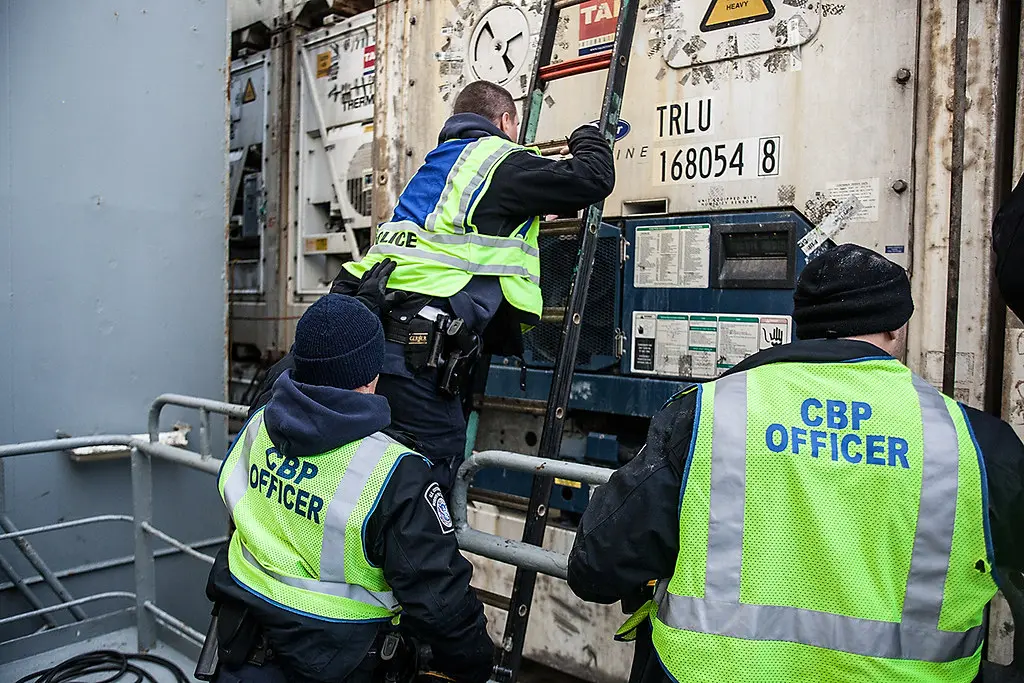
The immediate flashpoint is transshipment…Chinese steel, aluminum and other goods routed through Canada, sometimes with minimal processing, to dodge U.S. duties. This isn’t a new U.S. demand invented to bully Ottawa. The U.S. and Canada signed a joint statement back in 2019 explicitly committing to prevent steel and aluminum made outside North America from being transshipped into either country, with a mechanism to distinguish steel melted and poured in North America from steel made elsewhere. Washington has spent close to eight years asking Canada to actually enforce that commitment as Chinese overcapacity in steel, aluminum and EVs has only intensified. China is not a market economy by any classification the U.S., the EU, or frankly most trade economists would apply…state subsidies, non-market pricing, and industrial overcapacity are baked into its export model. Insisting Canada help police the back door isn’t an unreasonable ask from an ally; it’s the U.S. exercising rights it has held under the North American trade framework for the better part of a decade.
Instead of working that dispute through the negotiating channel, Carney’s public posture has been to frame U.S. enforcement demands as “uneconomic” and “unfair” and to take the fight to the world stage…casting the U.S. as the aggressor against smaller, put-upon “middle powers” rather than engaging the underlying and legitimate transshipment concern among others. That’s a political strategy, not a trade strategy, and it’s part of why talks collapsed on August 21 and 50% tariffs on a wide swath of Canadian goods…hockey sticks, building materials, spirits, apparel has now taken effect….Canada has vowed to match dollar for dollar.
Beijing has a front-row seat, and it’s cheering
None of this is happening in a vacuum, and China isn’t a bystander watching quietly. When Canada announced dollar-for-dollar retaliation against the U.S. the Global Times…Beijing’s nationalist state tabloid…ran an editorial praising Ottawa’s move as a “Chinese-style counterattack,” pointing to U.S. Trade Representative Jamieson Greer’s own comparison of Canada’s tactics to the kind of thing China would do and framing it as proof that “concessions toward the US do not necessarily bring respect and stability.” That’s not incidental commentary…it’s Beijing actively working to reframe a G7 founding member’s dispute with Washington as validation of its own worldview, and using a fracture between two of America’s closest allies as a propaganda opportunity. When your own state media is publicly cheering an American ally for behaving “like China,” that should be read as exactly what it is: an adversary recognizing an opening and moving to widen it, not just observe it.
That’s the strategic risk sitting underneath the tariff numbers. Every week this drags on, Beijing gets to position itself as the responsible, “win-win” alternative to an unpredictable United States…while quietly deepening the very commercial ties (EVs, canola, steel) that Washington has spent eight years asking Canada to police. Carney doesn’t have to be pro-Beijing for this to be a problem. He just has to keep giving China’s messaging apparatus material to work with, every time Ottawa frames U.S. enforcement demands as bullying rather than as a legitimate ask from a treaty partner.
Where this puts Canada in the “bucket” framework
Treasury Secretary Bessent’s now-familiar description of U.S. trade strategy…sorting countries into green, yellow and red buckets based on how closely they’re willing to align with U.S. objectives…was never meant to apply to Canada. Canada was supposed to be about as green as it gets: a USMCA partner, a security ally, a fellow democracy with 85%+ of bilateral trade still moving tariff-free even amid the fighting. But a Canadian government that runs to Beijing for tariff relief on EVs while publicly rebuking Washington’s transshipment enforcement is behaving, functionally, like a country hedging toward the yellow-to-red end of that spectrum. That’s the real danger here: Canada risks getting treated with the same suspicion reserved for non-market economies and strategic competitors, not because of a formal U.S. policy shift, but because Ottawa’s own conduct is inviting the comparison. Guilt by trade association is not a place a G7 founding member and USMCA partner should be flirting with.
The numbers don’t favor Canada in a war of attrition
However this is framed politically, the economic exposure is deeply asymmetric.
- Roughly 73–81% of Canadian exports go to the United States, depending on the measure used, versus Canada absorbing a much smaller, more diversified share of total U.S. trade.
- An estimated 20% of Canadian GDP is directly tied to U.S.-bound exports.
- Canada’s manufacturing sector has already lost more than 32,000 jobs over the past year, concentrated in autos, wood products, paper, and primary metals — sectors down 4–18% year-over-year.
- The 2025–26 tariff cycle has cut an estimated 1.5–2% off Canadian GDP, with households absorbing roughly $1,700–$2,000 in added annual costs.
- The new 50% duties cover about $28 billion in Canadian exports — only around 5% of the total flow south, but concentrated in politically sensitive, trade-exposed sectors in Ontario, Quebec and British Columbia.
- On the flip side, roughly 34 U.S. states count Canada as their single largest export market, so this is not cost-free for the U.S. either…but the U.S. economy is roughly ten times the size of Canada’s and far less trade-dependent as a share of GDP.
Canada has made real progress diversifying…non-U.S. exports were up 17% year-over-year through early 2026, and Ottawa has set a goal of doubling non-U.S. exports by 2035. That’s the right long-term instinct. But it doesn’t change the near-term math: the U.S. can absorb this fight, spread the pain across a $30 trillion economy, and use other levers…Section 122, Section 301, AD/CVD actions…to keep pressure on transshipment regardless of what the courts do to any one legal basis. Canada does not have a comparable set of options, and no trading relationship it can stand up at anything close to the scale or speed of the U.S. market.
The pragmatism problem
Here’s the part that should worry executives on both sides of the border more than any single tariff rate: Carney did not become Prime Minister despite his friction with Trump. He became Prime Minister largely because of it. His campaign was built substantially around standing up to Trump’s annexation rhetoric, not to mention Lake America and positioning himself as the adult in the room against an erratic American president. That’s a legitimate political coalition to build…but it also means Carney has very little domestic incentive to be seen making concessions to Washington, especially on an issue like Chinese transshipment where he can credibly claim he’s protecting Canadian sovereignty rather than caving to U.S. pressure. Trump, for his part, has shown no more appetite for backing down publicly than Carney has.
That’s the combination that should concern anyone planning around USMCA’s 2026 review: two leaders whose bases both reward confrontation over compromise, on an issue…Chinese non-market practices infiltrating North American supply chains…where the U.S. position has actual legal and economic grounding going back nearly a decade. A trade relationship this deeply integrated, worth hundreds of billions of dollars and tens of thousands of jobs on both sides of the border, doesn’t get fixed by two leaders who each have more to gain politically from holding the line than from finding the exit ramp.
The tariffs will eventually get renegotiated, because they always do. But the underlying rift an ideological one, not merely a tactical one…is going to outlast this particular round of duties, and it’s worth watching closely heading into the USMCA review.
If your business is caught in the crossfire of this shifting trade landscape…tariff exposure, transshipment risk, USMCA uncertainty, supply chain diversification…let’s talk. Reach out and let’s get you a strategy that holds up regardless of which way this goes while ensuring you are structured for enhanced trade compliance. It’s coming and you need to be prepared!
What’s your read…does Canada have more diversification runway than the numbers suggest, or is this exposure structural for the foreseeable future? Interested in how others in trade, manufacturing, and logistics are hedging this.